A Gentle Nervous System Regulation Routine
A nervous system regulation routine is often described online as a sequence that should make your body respond in a particular way. A more useful self-care approach is to create a repeatable pause with options. You choose a cue, a manageable activity, and an ending. The routine below organizes your day; it does not measure your nervous system, reset it, or promise a medical result.
Define the task in everyday language
Instead of “regulate myself perfectly,” write “pause between work and dinner.” This makes the routine answer a concrete need. Your situation might call for quiet, movement, water, an unfinished-task list, or contact with someone supportive. A worksheet can help you notice those preferences without assigning them to a biological state.
Choose a cue you already encounter, such as closing your work document or setting your bag down. Avoid using every uncomfortable sensation as a reminder to practice. That can turn a helpful pause into constant checking. A routine should fit around your life, including days when there is no time or interest in doing it.
Build three boxes on a page
Label the first box “Arrive.” Put one external observation there: name the room or describe an object. Label the second “Choose.” List two optional actions, such as sitting comfortably or making a note about the next task. Label the third “Continue.” Write what you intend to do after the pause.
The final box matters because self-care can otherwise become open-ended searching. For example: “Arrive: kitchen, evening light. Choose: sit by table or put phone aside. Continue: start dinner.” You do not need to finish every possible activity. Select one, skip one, or stop at the first box if that is enough for today.
Make different versions for different days
A small version might contain a single observation and a next-step note. A roomier version could add a comfortable stretch you already know is suitable for you, or a few lines of journaling. Neither version is more successful. The difference is time and preference, rather than a prescribed dose of nervous system work.
Create an alternative for days when body attention feels unwelcome. That version could involve arranging tomorrow's notebook, listening to an ordinary household sound, or writing one practical request. Keeping an external option prevents the routine from depending on introspection. You can also choose direct support instead of an exercise when that is what you need.
An example after a busy workday
Jordan closes a laptop and writes down the task that needs attention tomorrow. Jordan looks at a plant near the window, sits in a familiar chair, and chooses whether to stay there briefly or get a drink. The page ends with “make dinner.” No rating is required, and no physical response is expected.
On another evening, Jordan skips the chair and calls a friend. The routine has still served its organizational purpose: it created a moment to choose the next action. This example is not a case study or a reported health outcome. It shows how a routine can include flexibility without turning a missed step into a problem.
Review fit once, rather than checking constantly
After several opportunities to use the page, ask which instructions were convenient. Did the cue occur at a useful time? Was the sheet easy to find? Did an instruction feel intrusive? Edit the wording rather than adding more steps by default. “Read one line” may be more usable than a long checklist after a tiring day.
Do not infer causation from a few notes. Sleep, work demands, relationships, physical health, and countless other factors can affect how a day feels. A record of feeling better after a pause does not show which element caused the change. It can still tell you that you liked the format and want to use it again.
Keep the routine separate from urgent needs
A routine is optional. New or worrying physical symptoms should not be assumed to be stress because they occur during a busy week. If a practice makes you feel worse, stop and consider appropriate help. Do not keep repeating it because a schedule says you are supposed to complete a certain number of days.
The NIMH self-care page describes self-care as something that can complement care and treatment. It does not turn this three-box routine into a clinical protocol. For a printable layout, see grounding worksheets; for a lighter record, see tracking without a streak.
A routine is allowed to stay simple
There is no need to graduate from a quiet observation to an elaborate sequence. Write the routine in language you would actually use at the end of the day. If a timer feels demanding, use the completion of one small task as the endpoint. Put the page away afterward. The plan should reduce decisions about organization, rather than introduce a new standard you have to meet.
Product format and boundaries
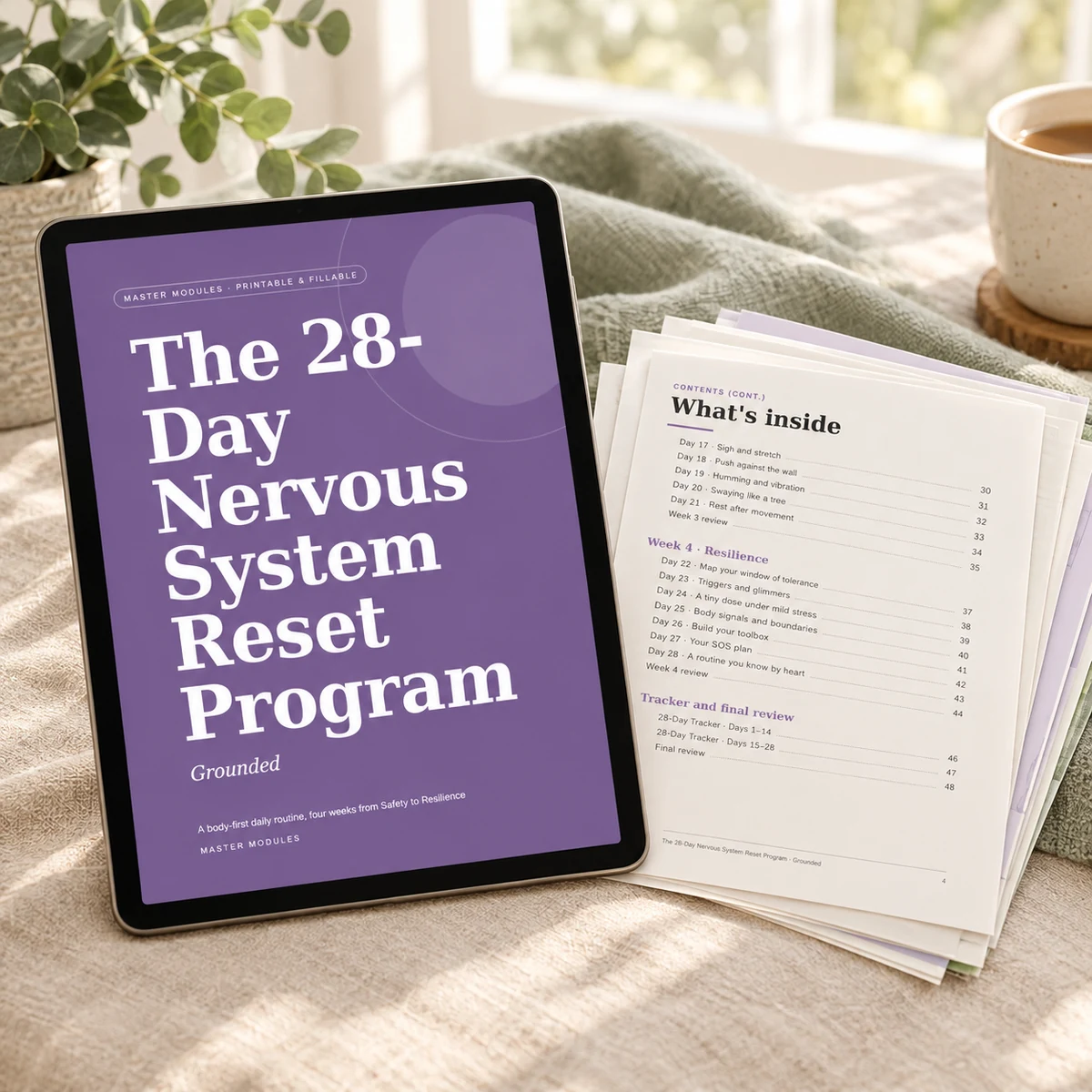
Grounded — The Somatic Reset Workbook is a self-guided product with a 130-page main workbook. Its included bonuses are a 21-page SOS resource and a 50-page tracker, plus a companion webapp. Those are format and inclusion details, not evidence of a health outcome. The separate card deck, wind-down routine, 28-day program, and movement library are extras, not part of this base bundle.
You can use a written resource to organize prompts, choices, and personal notes. You do not need to finish every page, share private entries, or produce a particular sensation. Ivy is a brand persona, not a therapist. The standard 365-day money-back guarantee concerns the purchase; it does not promise symptom improvement or a timetable for recovery. Check the product details and refund terms before deciding whether the format fits your needs.
Self-care has limits
These examples are educational self-observation activities, not diagnosis, individualized medical advice, or trauma treatment. Stop any practice that feels distressing or physically uncomfortable. Self-care can complement professional care; it should not delay getting help for persistent, worsening, or concerning difficulties. A qualified health professional can help you decide what is appropriate for your circumstances.