A Gentle Somatic Movement Journal: What to Record
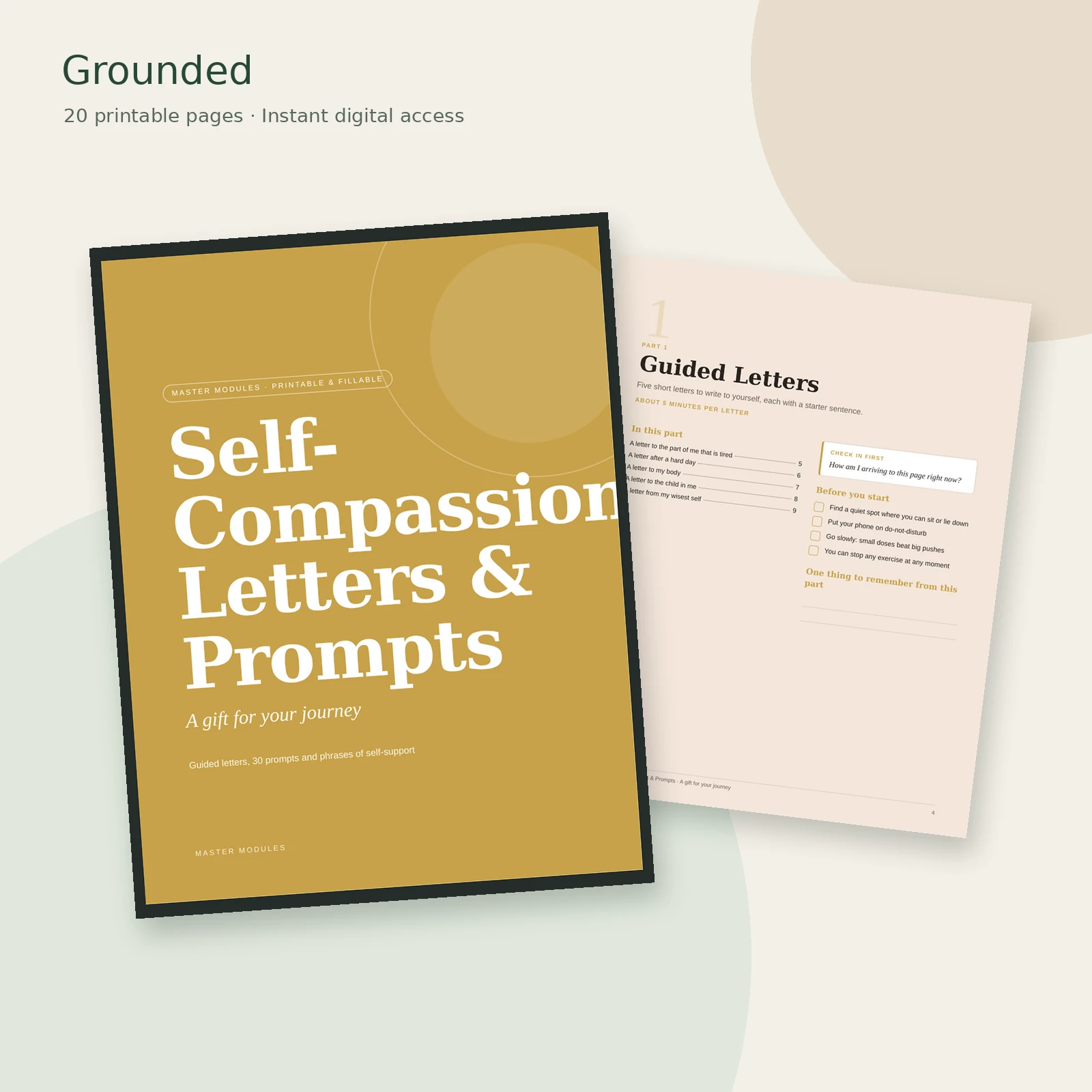
A movement journal can record the practical details of an ordinary activity: what you chose, whether you had enough space, and whether the instruction was comfortable to follow. It does not need to interpret every sensation or assign meaning to a physical reaction. In this guide, “somatic” refers to attention to bodily experience during optional self-care. A journal is not a diagnosis, a rehabilitation plan, or a substitute for advice about an injury or health condition.
Begin with an activity you already know
You do not need to learn a new movement to begin a journal. You could record an ordinary walk, a comfortable change of position, or a familiar hand movement. Choosing something known makes it easier to focus on the usefulness of the journal format. It also avoids turning a writing exercise into a reason to attempt an unfamiliar physical challenge.
If movement is painful, restricted, or uncertain for you, follow appropriate professional guidance. A worksheet cannot decide what is suitable for your circumstances. You can also record a choice to rest or use a nonmovement prompt. Those are valid entries, not incomplete attempts that need to be replaced by a more demanding activity.
Set a practical intention
An intention can describe how you want to approach the activity rather than how you want your body to feel afterward. Examples include “Leave enough space beside the chair,” “Stop when I choose,” or “Write one sentence afterward.” These are choices within your control. A requirement to feel calm, release a feeling, or achieve a physical change can turn the journal into a performance test.
Write the intention before starting, or choose it afterward if preparing a page would interrupt your day. The order is not important unless it helps you remember what you meant to record. You are using a notebook to support attention, not following a protocol that becomes invalid if a box is filled out at the wrong time.
Describe the setup in a few words
Useful setup notes might include the place, the surface, and the amount of room available. “Living room, ordinary chair, enough space for hands” is a complete description. You do not need to photograph your home, measure a range of motion, or record detailed personal information to make the page useful.
A setup note can help you distinguish a confusing instruction from an inconvenient environment. Perhaps the prompt was understandable but required more room than you had. Perhaps a digital page was hard to read while standing. Those observations suggest practical changes to the format, without requiring you to draw conclusions about your health or ability.
Notice without explaining everything
After an activity, write a plain description if you want to. “Easy to follow,” “Preferred a smaller movement,” “Wanted to sit down,” and “No particular change” are all sufficient. You can also describe an external detail, such as the sound in the room or the position of a nearby object. There is no requirement to scan internally or find a special sensation.
Avoid treating shaking, warmth, yawning, or another ordinary reaction as proof that something specific has been released or repaired. A journal entry describes what you noticed; it cannot establish the cause. If a symptom is new, severe, persistent, or concerning, seek appropriate assessment rather than using an interpretation from a workbook to explain it away.
Keep the first template short
Try five labels: activity, setup, intention, observation, and next choice. Give each one a small amount of space. A compact page makes it clear that a brief entry is acceptable. If you later want more room, expand the field that you actually use instead of adding every possible category in advance.
Here is an example: “Activity: short familiar walk. Setup: usual path, comfortable shoes. Intention: notice the surroundings. Observation: enjoyed looking at the trees; did not want to write much. Next choice: use the same short format tomorrow.” The entry makes no claim about a health outcome. It records a preference and a practical decision.
Let stopping be part of the record
An entry can end with “stopped,” “skipped,” or “chose something else.” You do not have to justify the choice. Including these options on the page can prevent a movement journal from becoming a list of tasks that must be completed regardless of how the activity feels. Comfort, privacy, and available attention can change from day to day.
If an instruction feels confusing, stop and find a clearer explanation rather than improvising a demanding variation. If writing makes you feel watched or judged, simplify the record or put it away. The journal is optional. Its value depends on whether it helps you organize your experience, not whether you preserve a continuous streak of entries.
Review preferences rather than chasing intensity
At the end of a week, look for practical preferences: seated or standing, paper or phone, a quiet setting or an ordinary walk, one instruction or a longer sequence. Choose one adjustment based on those notes. You might keep a page near the chair or switch to a shorter record after an activity.
Do not use intensity as the measure of a good session. A dramatic reaction is not a requirement, and a quiet, ordinary experience is not a lesser result. The NCCIH discussion of relaxation techniques emphasizes that evidence and suitability differ across practices. A movement journal does not remove those differences or supply individualized guidance.
How this relates to Grounded
Grounded includes a main workbook with gentle movement and reflection material, a separate SOS bonus, a tracker and journal bonus, and a companion app. The larger Somatic Movement Library is an optional paid product with 50 movements; Somatic Movement Essentials is a separate shorter edition with 20. Do not assume that every product in the family is included with the entry workbook.
You can use the entry tracker to record an ordinary activity without purchasing another program. For broader format choices, read how to choose a somatic workbook. If you want a smaller starting point, the beginner guide explains how to choose one optional prompt and end it without turning the experience into a test.