Grounding Techniques for Anxiety: A Gentle Guide
Grounding techniques for anxiety are ways to bring attention to your current surroundings. A useful starting point is ordinary and specific: identify the room, look at a familiar object, and notice what is happening right now. You do not have to feel calm for the exercise to count. This guide offers optional self-care examples, not a treatment plan or a test of whether your anxiety is serious.
Start with the room, before a body scan
Choose a place where you can safely pause. Keep your eyes open if that feels more comfortable. Name three things that establish where you are: “I am at my kitchen table. The lamp is on. My blue mug is beside me.” You can say these quietly or write them. Accurate, plain details are enough; there is no need to convince yourself that everything is wonderful.
Check practical needs before adding an exercise. A noisy phone, uncomfortable chair, or unfinished conversation may need an ordinary adjustment. Grounding does not require ignoring your environment. If a situation is unsafe, getting appropriate help matters more than completing a sensory list. Do not practice an attention exercise while driving or handling equipment.
Make the familiar 5-4-3-2-1 list optional
One possible structure is to name five things you see, four things you can feel through everyday contact, three sounds, two smells, and one taste. These numbers are a memory aid, not a required sequence. You can skip smell and taste, stay with vision, or stop after one observation. Never seek out a strong sensation just to satisfy the list.
For example, an office version might be: a square window, green notebook, wooden door, white wall, and silver pen. Contact observations could be your sleeve, chair back, shoe lining, and desktop. If focusing on contact feels uncomfortable, return to visible objects. An accessible version might use only sounds or only familiar objects described by someone you trust.
Try an object description instead
Pick an ordinary item that is already nearby. Describe its color, shape, edges, material, and location without attaching a story. “This notebook is yellow. It has rounded corners. It is closed. It rests beside the keyboard.” The task is description, not distraction through complicated mental work.
A person waiting for a meeting could describe a water bottle for a few moments, then decide whether to continue waiting, get water, or ask for a short break. This example does not predict a change in anxiety. It simply gives attention a concrete task and leaves room for the next practical choice. Avoid turning the object into something you must always carry.
Build a small menu for different places
Write three options on a card: name the room, describe an object, and notice one ordinary sound. Next to each, list a place where it is convenient. Naming the room may work at home; describing a pen may be more discreet at a desk. A familiar sound might be easier when looking around would attract unwanted attention.
Keep the menu short enough to use without researching a new method every time. You can also add “skip the exercise and contact someone” as an option. A plan that includes stopping is more flexible than one that demands a successful outcome. Consider environmental access, sensory differences, and personal preferences when choosing your own examples.
Record usefulness without grading your body
Afterward, write three brief notes: where you were, what you tried, and whether you would choose it again. An entry might read, “Bus stop; named three signs; easy to remember, but the traffic was distracting.” Another might be, “Kitchen; described mug; no noticeable change; preferred opening the curtain.” Both entries provide useful information about fit.
Avoid repeatedly checking whether anxiety has disappeared. You can end with the same feeling you started with and still have learned that a particular prompt was easy or awkward. If tracking makes you monitor yourself more intensely, leave out ratings and keep only a preference note. You do not need a streak, score, or daily obligation.
A low-pressure practice example
During an ordinary afternoon, place a card by your notebook. Read one prompt, look around, name two details, and put the card down. Continue your day. Trying the format during a manageable moment lets you edit the wording without demanding that it work during distress. Keep the example brief rather than repeating it until you get a specific feeling.
If you want a written structure, printable grounding worksheets explain how to arrange prompts and notes. For an alternative that uses a drawing, see body mapping. Both are optional ways to organize observation; neither establishes a diagnosis or replaces individualized support.
What the source supports
The VA PTSD Coach grounding page describes grounding in relation to the present moment. The menus and sample entries here are original organizational examples. They are not evidence that a particular sequence will stop anxiety, prevent panic, or work for every reader.
Product format and boundaries
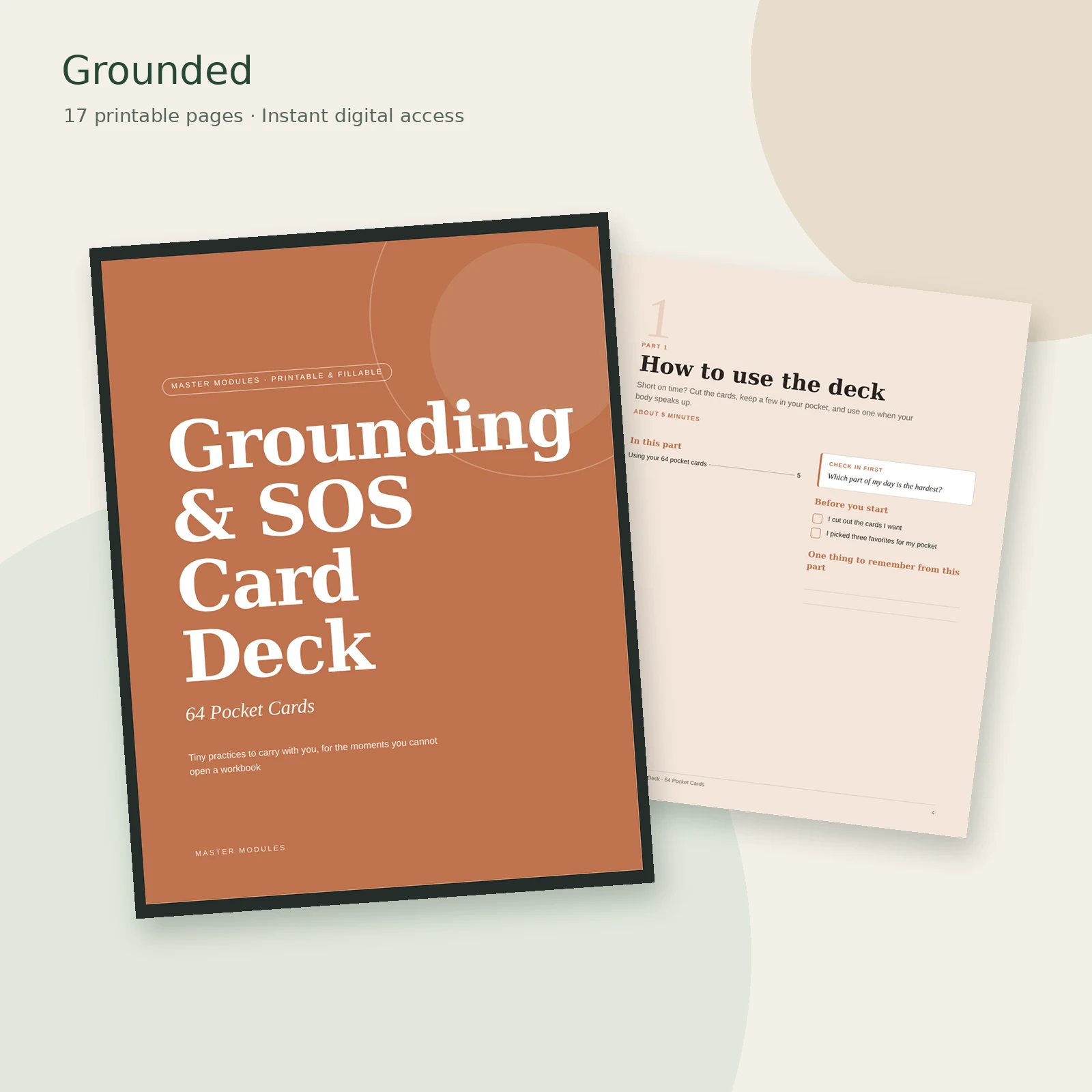
Grounded — The Somatic Reset Workbook is a self-guided product with a 130-page main workbook. Its included bonuses are a 21-page SOS resource and a 50-page tracker, plus a companion webapp. Those are format and inclusion details, not evidence of a health outcome. The separate card deck, wind-down routine, 28-day program, and movement library are extras, not part of this base bundle.
You can use a written resource to organize prompts, choices, and personal notes. You do not need to finish every page, share private entries, or produce a particular sensation. Ivy is a brand persona, not a therapist. The standard 365-day money-back guarantee concerns the purchase; it does not promise symptom improvement or a timetable for recovery. Check the product details and refund terms before deciding whether the format fits your needs.
Self-care has limits
These examples are educational self-observation activities, not diagnosis, individualized medical advice, or trauma treatment. Stop any practice that feels distressing or physically uncomfortable. Self-care can complement professional care; it should not delay getting help for persistent, worsening, or concerning difficulties. A qualified health professional can help you decide what is appropriate for your circumstances.