Inside Grounded: The Somatic Reset Workbook
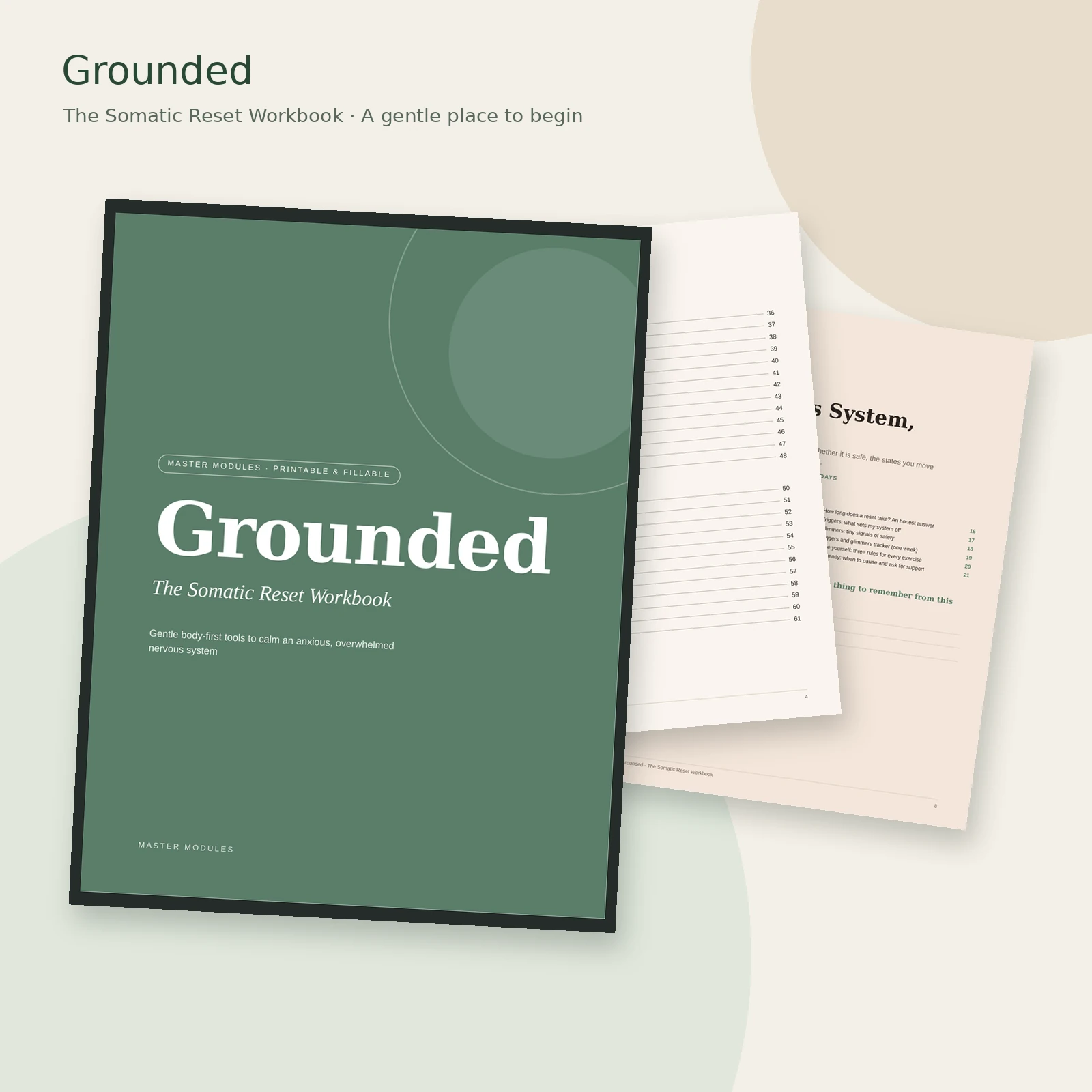
Grounded is a digital collection for self-guided body-awareness practice and reflection. The entry purchase includes a 130-page fillable main workbook, two separate bonus PDFs, and a companion web app. It is educational self-care material, not a course of treatment or a substitute for working with a qualified professional. This guide describes the actual collection so you can distinguish the entry bundle from the optional products shown later in the funnel.
The entry bundle at a glance
The main workbook is Grounded, The Somatic Reset Workbook. Its eight parts introduce topics, offer prompts, and give you space to record observations. The separate 2-Minute SOS Reset is 21 pages and is intended as an easy starting point. The Regulation Tracker and Journal is a 50-page bonus for organizing short entries over time. These are three PDFs, not a single file with every optional program inside it.
The companion web app provides tools such as check-ins, a body map, grounding prompts, and personal notes. You can choose paper, fillable PDF pages, or the app according to convenience. Information entered in one format does not automatically become an entry in another. Keep that in mind if you switch between a printed tracker and a browser tool.
Parts one and two: explanations and body mapping
The first part is Your Nervous System, Explained. It provides the vocabulary and introductory maps used elsewhere in the workbook. Treat a descriptive state map as an educational aid, rather than a diagnosis or a measurement of a particular nerve. You can read the explanations at your own pace and return to them when a later page uses an unfamiliar term.
Body Mapping and Felt Sense is the second part. Its pages invite you to describe what you notice and locate it on a simple map. You do not need unusual sensations or perfect emotional vocabulary. An entry can be as ordinary as “warm hands,” “shoulders against the chair,” or “nothing I want to describe today.” External observation remains an option if internal attention feels unhelpful.
Parts three and four: grounding and breath
The grounding part gathers present-focused prompts into a consistent page format. The purpose of the format is to make a chosen prompt easier to find and record. It does not turn a sensory exercise into a guaranteed way to stop distress. You can adapt a prompt, omit a category, or stop without completing the page.
Breath and Vagus Nerve is the fourth part. The name describes the subject matter of those pages, not a claim that the PDF measures or treats vagal function. Do not force a breath pattern or continue an activity that causes discomfort. If you need individualized guidance about breathing or another health concern, follow appropriate professional advice instead of a general workbook instruction.
Parts five and six: smaller doses and difficult moments
Part five introduces Pendulation, Titration and Sequencing. These are presented as topics for learning about pacing and organizing practice. The practical message is to keep a self-guided activity manageable and notice when you want to pause. Reading the terms does not qualify someone to deliver trauma treatment or to interpret another person's physical reactions.
Freeze, Shutdown and Fawn is the sixth part. It includes explanatory and reflective material about experiences people may describe using those words. A self-description in a worksheet does not establish a diagnosis or explain every cause of tiredness, numbness, tension, or difficulty concentrating. New or concerning symptoms deserve appropriate assessment rather than being automatically assigned to a workbook category.
Parts seven and eight: boundaries and a personal plan
Part seven brings together Comfort Zone, Emotions, Boundaries and Body. It offers places to consider preferences and everyday limits. You might use a page to write a sentence you want to practice saying or to note which kinds of prompts you prefer. There is no requirement to disclose private experiences, confront another person, or make a major decision because a worksheet asks a question.
The last part is Your First Seven Days and Personal Regulation Plan. It provides an order for beginning and a place to make your own plan. “Seven days” describes the structure of a suggested starting sequence; it is not a deadline for a health outcome. You can spread those pages across a longer period or revisit an earlier page instead of progressing.
The two included bonuses
The 2-Minute SOS Reset brings short prompts into a separate file, reducing the need to search the main workbook when you only want a starting page. The Regulation Tracker and Journal adds repeated entry spaces and opportunities to review what you tried. Together they provide a starting point and a record, while the main workbook holds the larger collection of topics.
A sensible first session can be entirely administrative: download the files, save a blank original, and choose one page you might want to use. You do not have to complete a practice immediately to make the purchase useful. For a simple record format, see how to use a regulation tracker.
What is optional rather than included
The Grounding and SOS Card Deck and the Wind-Down Vagus Routine are optional paid add-ons. The 28-Day Nervous System Reset Program and Somatic Movement Library are later optional programs. Shorter editions are also offered: the 14-Day Somatic Starter and Somatic Movement Essentials. The shorter editions are different products, not merely the full programs at another price.
The Morning Grounding Ritual is packaged with the relevant D1 gift offer, and Self-Compassion Letters and Prompts is packaged with the relevant D2 gift offer. Those gifts do not mean that all eleven PDFs in the complete product family come with the entry purchase. Check the items listed in your chosen offer. The standard guarantee is 365 days. For general self-care context, NIMH describes self-care as supporting mental health and existing care, rather than replacing treatment.